Buy orbiter.eu ?
We are moving the project
orbiter.eu .
Are you interested in purchasing the domain
orbiter.eu ?
domain@kv-gmbh.de · 0541-91531010
Buy orbiter.eu ?
What are random orbit sanders and orbital sanders?
Random orbit sanders and orbital sanders are both types of power tools used for sanding wood and other materials. Random orbit sanders have a round sanding pad that moves in a random pattern, which helps prevent swirl marks on the surface being sanded. Orbital sanders, on the other hand, have a square or rectangular sanding pad that moves in a circular motion. Both sanders are commonly used for smoothing surfaces and removing imperfections in woodworking projects. **
What are orbital sanders and random orbital sanders?
Orbital sanders are power tools used for sanding wood, metal, or other materials. They move in a circular motion, making them ideal for smoothing surfaces and removing imperfections. Random orbital sanders, on the other hand, combine the spinning motion of traditional orbital sanders with a random orbital motion. This dual-action movement helps prevent swirl marks and provides a smoother finish, making random orbital sanders a popular choice for professional woodworkers and DIY enthusiasts. **


Similar search terms for Orbital
Top-Angebote
Products related to Orbital:
-
Uplifted Finds Octo Tier Orbital Interaction Module purpleStimulate your pets cognitive and physical agility with the OctoTier Orbital Interaction Module, a professionalgrade entertainment station engineered with multilevel predatory logic. This highutility module features a threetier orbital track...64,97 $*Shipping: 0,00 $Secure redirect to the provider
-
Airvana AV1200FAN Orbital Oscillating Portable Fan W/ RemoteMeet the Airvana Orbital Oscillating fan—your new go-to for a cooler, more comfortable space. This fan packs a punch with its orbital oscillation tech, giving you a consistent and strong airflow that reaches every corner of the room.83,99 $*Shipping: 0,00 $Secure redirect to the provider
-
Uplifted Finds Compact Orbital 1.2L Recirculation Hub grayOptimize your pets hydration routine with the Compact Orbital Hydration Hub, a professionalgrade water station engineered with spaceefficient recirculating logic. This highutility module features a 1.2L volumetric capacity, making it an ideal...131,97 $*Shipping: 0,00 $Secure redirect to the provider
-
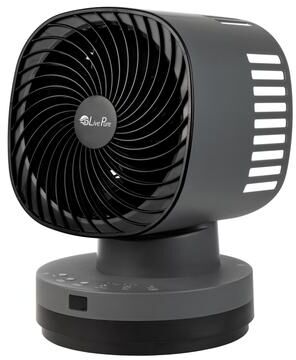
LivePure LP1200FAN Orbital Oscillating 4 Speed FanCool and freshen the air in your home with the LivePure LP1200FAN Orbital Oscillating Fan. The latest fan from LivePure features orbital oscillation, creating a powerful stream of airflow that circulates across a room.104,99 $*Shipping: 0,00 $Secure redirect to the provider


-
What is the orbital velocity during the orbit of the Earth?
The orbital velocity of the Earth is approximately 29.78 kilometers per second (about 107,200 kilometers per hour). This velocity is necessary for the Earth to maintain its orbit around the Sun, balancing the gravitational force pulling it towards the Sun with the centrifugal force pulling it away. This high velocity allows the Earth to complete one orbit around the Sun in about 365.25 days. **
-
Why is the 1s orbital the lowest energy orbital?
The 1s orbital is the lowest energy orbital because it is closest to the nucleus of the atom. Electrons in the 1s orbital experience the strongest attraction to the positively charged nucleus, resulting in a lower energy state. As electrons move to higher energy orbitals, they are farther from the nucleus and experience weaker attraction, leading to higher energy levels. Additionally, the 1s orbital has the lowest principal quantum number (n=1), which also contributes to its lower energy compared to higher energy orbitals with larger principal quantum numbers. **
-
How do you calculate the orbital period of a satellite?
The orbital period of a satellite can be calculated using Kepler's third law of planetary motion, which states that the square of the orbital period of a satellite is directly proportional to the cube of the semi-major axis of its orbit. The formula for calculating the orbital period is T^2 = (4π^2 / G(M1 + M2)) * a^3, where T is the orbital period, G is the gravitational constant, M1 and M2 are the masses of the two bodies (usually the satellite and the planet it orbits), and a is the semi-major axis of the satellite's orbit. By plugging in the values for G, M1, M2, and a, the orbital period of a satellite can be determined. **
-
Is the molecular orbital the same as the orbital model?
No, the molecular orbital model is not the same as the orbital model. The orbital model refers to the concept of atomic orbitals, which are regions of space around an atomic nucleus where electrons are likely to be found. On the other hand, the molecular orbital model describes the behavior of electrons in molecules, taking into account the interactions between atomic orbitals to form molecular orbitals. In essence, the molecular orbital model is an extension of the orbital model to describe the electronic structure of molecules. **


How do you calculate the orbital radius of a geostationary satellite?
The orbital radius of a geostationary satellite can be calculated using the formula for the radius of a circular orbit, which is given by: r = √(G*M*T^2 / 4π^2) Where: r = orbital radius G = gravitational constant (6.674 × 10^-11 N m^2/kg^2) M = mass of the Earth (5.972 × 10^24 kg) T = orbital period of the satellite (24 hours for a geostationary satellite) By plugging in the values for G, M, and T into the formula, you can calculate the orbital radius of a geostationary satellite. **
Can a p- or d-orbital overlap with an s-orbital?
No, a p- or d-orbital cannot directly overlap with an s-orbital. This is because the p- and d-orbitals have different shapes and orientations compared to the s-orbital. However, p- and d-orbitals can overlap with each other, and s-orbitals can overlap with each other, leading to the formation of molecular orbitals in chemical bonding. **
Top-Angebote
Products related to Orbital:
-
Uplifted Finds Disco Orbital Reflective And Photonic Interior Stabilization Interface Disco Orbital Reflective And Photonic Interior Stabilization InterfaceInaugurate a direct energy for your vehicles cabin with this integrated optical solution. This Disco Ball Mirror Ornament serves as a functional choice for your visual navigation journeys, offering a highradiance alternative to standard lowvelocity...49,97 $*Shipping: 0,00 $Secure redirect to the provider
-
LivePure LP1200FAN Orbital Oscillating 4 Speed FanCool and freshen the air in your home with the LivePure LP1200FAN Orbital Oscillating Fan. The latest fan from LivePure features orbital oscillation, creating a powerful stream of airflow that circulates across a room.104,99 $*Shipping: 0,00 $Secure redirect to the provider
-
Uplifted Finds Octo Tier Orbital Interaction Module purpleStimulate your pets cognitive and physical agility with the OctoTier Orbital Interaction Module, a professionalgrade entertainment station engineered with multilevel predatory logic. This highutility module features a threetier orbital track...64,97 $*Shipping: 0,00 $Secure redirect to the provider
-
Airvana AV1200FAN Orbital Oscillating Portable Fan W/ RemoteMeet the Airvana Orbital Oscillating fan—your new go-to for a cooler, more comfortable space. This fan packs a punch with its orbital oscillation tech, giving you a consistent and strong airflow that reaches every corner of the room.83,99 $*Shipping: 0,00 $Secure redirect to the provider
-
What are random orbit sanders and orbital sanders?
Random orbit sanders and orbital sanders are both types of power tools used for sanding wood and other materials. Random orbit sanders have a round sanding pad that moves in a random pattern, which helps prevent swirl marks on the surface being sanded. Orbital sanders, on the other hand, have a square or rectangular sanding pad that moves in a circular motion. Both sanders are commonly used for smoothing surfaces and removing imperfections in woodworking projects. **
-
What are orbital sanders and random orbital sanders?
Orbital sanders are power tools used for sanding wood, metal, or other materials. They move in a circular motion, making them ideal for smoothing surfaces and removing imperfections. Random orbital sanders, on the other hand, combine the spinning motion of traditional orbital sanders with a random orbital motion. This dual-action movement helps prevent swirl marks and provides a smoother finish, making random orbital sanders a popular choice for professional woodworkers and DIY enthusiasts. **
-
What is the orbital velocity during the orbit of the Earth?
The orbital velocity of the Earth is approximately 29.78 kilometers per second (about 107,200 kilometers per hour). This velocity is necessary for the Earth to maintain its orbit around the Sun, balancing the gravitational force pulling it towards the Sun with the centrifugal force pulling it away. This high velocity allows the Earth to complete one orbit around the Sun in about 365.25 days. **
-
Why is the 1s orbital the lowest energy orbital?
The 1s orbital is the lowest energy orbital because it is closest to the nucleus of the atom. Electrons in the 1s orbital experience the strongest attraction to the positively charged nucleus, resulting in a lower energy state. As electrons move to higher energy orbitals, they are farther from the nucleus and experience weaker attraction, leading to higher energy levels. Additionally, the 1s orbital has the lowest principal quantum number (n=1), which also contributes to its lower energy compared to higher energy orbitals with larger principal quantum numbers. **
Similar search terms for Orbital
-
Uplifted Finds Compact Orbital 1.2L Recirculation Hub grayOptimize your pets hydration routine with the Compact Orbital Hydration Hub, a professionalgrade water station engineered with spaceefficient recirculating logic. This highutility module features a 1.2L volumetric capacity, making it an ideal...131,97 $*Shipping: 0,00 $Secure redirect to the provider
-
LivePure LP1200FAN Orbital Oscillating 4 Speed FanCool and freshen the air in your home with the LivePure LP1200FAN Orbital Oscillating Fan. The latest fan from LivePure features orbital oscillation, creating a powerful stream of airflow that circulates across a room.104,99 $*Shipping: 0,00 $Secure redirect to the provider
-
Uplifted Finds Octo Tier Orbital Interaction Module greenStimulate your pets cognitive and physical agility with the OctoTier Orbital Interaction Module, a professionalgrade entertainment station engineered with multilevel predatory logic. This highutility module features a threetier orbital track...64,97 $*Shipping: 0,00 $Secure redirect to the provider
-
How do you calculate the orbital period of a satellite?
The orbital period of a satellite can be calculated using Kepler's third law of planetary motion, which states that the square of the orbital period of a satellite is directly proportional to the cube of the semi-major axis of its orbit. The formula for calculating the orbital period is T^2 = (4π^2 / G(M1 + M2)) * a^3, where T is the orbital period, G is the gravitational constant, M1 and M2 are the masses of the two bodies (usually the satellite and the planet it orbits), and a is the semi-major axis of the satellite's orbit. By plugging in the values for G, M1, M2, and a, the orbital period of a satellite can be determined. **
-
Is the molecular orbital the same as the orbital model?
No, the molecular orbital model is not the same as the orbital model. The orbital model refers to the concept of atomic orbitals, which are regions of space around an atomic nucleus where electrons are likely to be found. On the other hand, the molecular orbital model describes the behavior of electrons in molecules, taking into account the interactions between atomic orbitals to form molecular orbitals. In essence, the molecular orbital model is an extension of the orbital model to describe the electronic structure of molecules. **
-
How do you calculate the orbital radius of a geostationary satellite?
The orbital radius of a geostationary satellite can be calculated using the formula for the radius of a circular orbit, which is given by: r = √(G*M*T^2 / 4π^2) Where: r = orbital radius G = gravitational constant (6.674 × 10^-11 N m^2/kg^2) M = mass of the Earth (5.972 × 10^24 kg) T = orbital period of the satellite (24 hours for a geostationary satellite) By plugging in the values for G, M, and T into the formula, you can calculate the orbital radius of a geostationary satellite. **
-
Can a p- or d-orbital overlap with an s-orbital?
No, a p- or d-orbital cannot directly overlap with an s-orbital. This is because the p- and d-orbitals have different shapes and orientations compared to the s-orbital. However, p- and d-orbitals can overlap with each other, and s-orbitals can overlap with each other, leading to the formation of molecular orbitals in chemical bonding. **
* All prices are inclusive of VAT and, if applicable, plus shipping costs. The offer information is based on the details provided by the respective shop and is updated through automated processes. Real-time updates do not occur, so deviations can occur in individual cases. ** Note: Parts of this content were created by AI.