Buy orbiter.eu ?
We are moving the project
orbiter.eu .
Are you interested in purchasing the domain
orbiter.eu ?
domain@kv-gmbh.de · 0541-91531010
Buy orbiter.eu ?
What is a converging lens?
A converging lens is a type of lens that is thicker in the center than at the edges. It is designed to bring parallel rays of light together to a single point known as the focal point. This type of lens is commonly used in cameras, telescopes, and magnifying glasses to focus light and create clear images. The focal length of a converging lens is positive, and it can produce both real and virtual images depending on the object's distance from the lens. **
What is a converging power series?
A converging power series is a mathematical series that represents a function as an infinite sum of powers of a variable. It is called "converging" when the series of terms approaches a finite value as the number of terms increases, meaning that the sum of the series approaches a specific value as the variable approaches a certain value. In other words, a converging power series is one for which the terms of the series become smaller and smaller, eventually approaching zero, allowing the sum of the series to converge to a specific value. **

Similar search terms for Converging
Top-Angebote
Products related to Converging:
-
Rocket League Steam CD KeySoccer meets racing once again in our long-awaited, MP-focused sequel to Supersonic Acrobatic Rocket-Powered Battle-Cars! A futuristic Sports-Action game, Rocket League, equips players with booster-rigged vehicles that can be crashed into balls for incredible goals or epic saves across multiple, highly-detailed arenas. Using an advanced physics system to simulate realistic interactions, Rocket League relies on mass and momentum to give players a complete sense of intuitive control in this unbelievable, high-octane re-imagining of association football.449,18 £*Shipping: 0,00 £Secure redirect to the provider
-
Inspire Curations Plush Rocket Astronaut Pillow 58cm Soft Space Toy & Kids Room Decor rocket 58cmBlast off into comfort and imagination with this adorable plush rocket astronaut pillow. Designed to be both a cuddly companion and a playful decor piece, this soft spaceship toy instantly brings a sense of adventure to any room. Its large 58cm size...120,50 $*Shipping: 0,00 $Secure redirect to the provider



-
How thick are biconvex converging lenses?
Biconvex converging lenses are typically thicker in the middle and thinner at the edges. The thickness of the lens can vary depending on the specific design and intended use, but generally, the thickness is proportional to the lens's focal length. Thicker lenses are often used for shorter focal lengths, while thinner lenses are used for longer focal lengths. The thickness of the lens is an important factor in determining its optical properties and performance. **
-
How does a converging lens work?
A converging lens works by refracting light rays that pass through it in such a way that they converge to a single point called the focal point. This is achieved because the lens is thicker in the middle and thinner at the edges, causing the light rays to bend towards the center of the lens. The point at which the light rays converge depends on the curvature and refractive index of the lens. This ability to converge light makes converging lenses useful in applications such as magnifying glasses, cameras, and eyeglasses. **
-
What is a converging lens in physics?
A converging lens is a type of lens that is thicker in the middle and thinner at the edges. It is designed to bring parallel rays of light together at a single point, known as the focal point. This type of lens is used to form real and inverted images, and is commonly found in devices such as cameras, telescopes, and microscopes. The focal length of a converging lens is the distance between the lens and its focal point, and it is a key parameter in determining the behavior of the lens. **
-
What is the opposite of converging plates?
The opposite of converging plates is diverging plates. Diverging plates move away from each other, creating a gap or rift between them. This movement can lead to the formation of new crust as magma rises to fill the gap, creating new oceanic crust in a process known as seafloor spreading. An example of diverging plates is the Mid-Atlantic Ridge. **

What are the optical properties of a converging lens?
A converging lens has several optical properties. It is thicker in the middle than at the edges, causing light rays passing through it to converge at a focal point on the opposite side of the lens. This results in the formation of a real image if the object is placed beyond the focal point, or a virtual image if the object is placed between the lens and the focal point. Converging lenses are used in various optical devices such as cameras, microscopes, and telescopes due to their ability to focus light rays. **
Why is a converging lens needed to correct farsightedness?
A converging lens is needed to correct farsightedness because it is able to bend light rays towards each other, bringing the focal point closer to the retina. In farsighted individuals, the focal point is located behind the retina, causing distant objects to be in focus but near objects to appear blurry. By using a converging lens, the light rays are refracted in a way that allows the image to be focused directly on the retina, correcting the farsightedness and improving near vision. **
Top-Angebote
Products related to Converging:
-
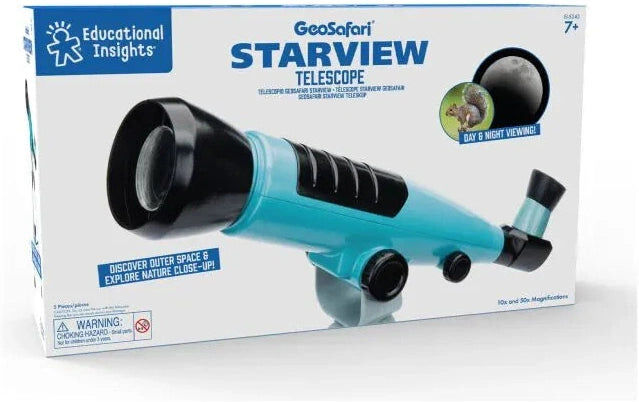
GeoSafari - MoonScope, Kid-Friendly Beginner Telescope for Astronomy Exploration and Fun, Includes Tabletop Tripod and Activity JournalThe GeoSafari MoonScope is a kid-friendly beginner telescope that makes astronomy approachable and fun. Perfect for curious young stargazers, it guides them to scan the sky, observe objects in space, and spot constellations with hands-on activities. The telescope features a kid-friendly beginner design that simplifies celestial exploration, and a tabletop tripod is included for stable, desk-side viewing on a table or nightstand. An activity journal provides guided experiments and space observations to track discoveries, and tools are included to learn how to scan the sky, identify planets and stars, and recognize constellations. The educational setup is suitable for home use or classroom learning, and it builds curiosity and observational skills through structured, hands-on activities. It also encourages independent exploration while learning fundamental astronomy concepts, and provides a clear, approachable path from setup to sky viewing, reducing setup hurdles.39,68 £*Shipping: 3,95 £Secure redirect to the provider
-
Wilco Publishing Universal Knowledge Library 8 Books Collection Set 1 (Space Exploration, Great Scientists, Astronomy, Wonders of the World, Pyramids and More)Universal Knowledge Library 8 Books Collection Set 1 (Space Exploration, Great Scientists, Astronomy, Wonders of the World, Pyramids and More) Discover fascinating facts about science, history, space and the world around us with the Universal Knowledge Library 8 Books Collection Set 1. This educational 8-book collection introduces young readers to a wide range of engaging topics, including Space Exploration, Great Scientists, Astronomy, Wonders of the World, Pyramids and more. Designed to make learning interesting and accessible, the series is ideal for children who enjoy discovering new facts, exploring important scientific ideas and learning about remarkable people, places and achievements. A useful addition to any home learning collection, school library or classroom, this set also makes a great educational gift for curious young readers. Arctic & Antarctic Dive into the icy extremes of Earth and meet the unique animals that live at the poles. World War I An engaging introduction to World War I—its causes, events, and lasting impact on history.. World War II Explore the major battles, leaders, and turning points of WWII in a simplified and visual format. Pyramids Uncover the secrets of ancient pyramids—from Egypt to Mesoamerica—in this easy-to-read guide. Wonders of the World Travel through ancient and modern marvels that have amazed humans for centuries. Astronomy A brilliant beginner’s guide to the night sky, stars, constellations, and planets. Great Scientists Meet the pioneers who changed the world—from Newton to Curie—with their groundbreaking discoveries. Space Exploration Blast off with rockets, satellites, and astronauts in this beginner’s guide to space travel.14,99 £*Shipping: 2,99 £Secure redirect to the provider
-
What is a converging lens?
A converging lens is a type of lens that is thicker in the center than at the edges. It is designed to bring parallel rays of light together to a single point known as the focal point. This type of lens is commonly used in cameras, telescopes, and magnifying glasses to focus light and create clear images. The focal length of a converging lens is positive, and it can produce both real and virtual images depending on the object's distance from the lens. **
-
What is a converging power series?
A converging power series is a mathematical series that represents a function as an infinite sum of powers of a variable. It is called "converging" when the series of terms approaches a finite value as the number of terms increases, meaning that the sum of the series approaches a specific value as the variable approaches a certain value. In other words, a converging power series is one for which the terms of the series become smaller and smaller, eventually approaching zero, allowing the sum of the series to converge to a specific value. **
-
How thick are biconvex converging lenses?
Biconvex converging lenses are typically thicker in the middle and thinner at the edges. The thickness of the lens can vary depending on the specific design and intended use, but generally, the thickness is proportional to the lens's focal length. Thicker lenses are often used for shorter focal lengths, while thinner lenses are used for longer focal lengths. The thickness of the lens is an important factor in determining its optical properties and performance. **
-
How does a converging lens work?
A converging lens works by refracting light rays that pass through it in such a way that they converge to a single point called the focal point. This is achieved because the lens is thicker in the middle and thinner at the edges, causing the light rays to bend towards the center of the lens. The point at which the light rays converge depends on the curvature and refractive index of the lens. This ability to converge light makes converging lenses useful in applications such as magnifying glasses, cameras, and eyeglasses. **
Similar search terms for Converging
-
Rocket League Steam CD KeySoccer meets racing once again in our long-awaited, MP-focused sequel to Supersonic Acrobatic Rocket-Powered Battle-Cars! A futuristic Sports-Action game, Rocket League, equips players with booster-rigged vehicles that can be crashed into balls for incredible goals or epic saves across multiple, highly-detailed arenas. Using an advanced physics system to simulate realistic interactions, Rocket League relies on mass and momentum to give players a complete sense of intuitive control in this unbelievable, high-octane re-imagining of association football.449,18 £*Shipping: 0,00 £Secure redirect to the provider
-
Inspire Curations Plush Rocket Astronaut Pillow 58cm Soft Space Toy & Kids Room Decor rocket 58cmBlast off into comfort and imagination with this adorable plush rocket astronaut pillow. Designed to be both a cuddly companion and a playful decor piece, this soft spaceship toy instantly brings a sense of adventure to any room. Its large 58cm size...120,50 $*Shipping: 0,00 $Secure redirect to the provider
-
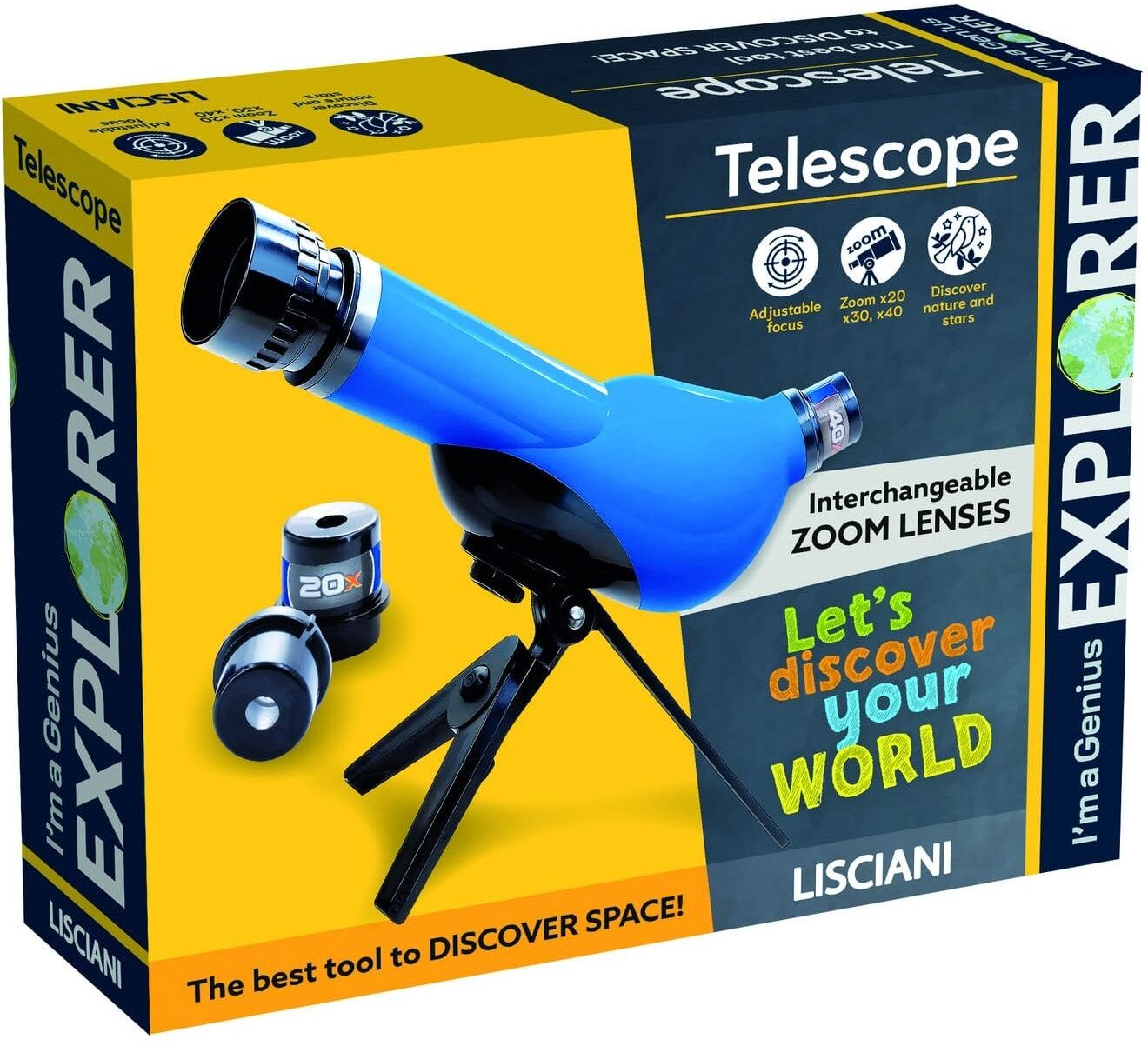
Lisciani I'm A Genius Telescope - Beginner Astronomy Tool for Sky ViewingA beginner-friendly telescope for first steps in astronomy and close-up sky viewing. Easy assembly and focusing for clearer views of stars and constellations. Ideal for family stargazing and early science projects.14,19 £*Shipping: 3,95 £Secure redirect to the provider
-
Collins 2024 Guide to the Night Sky Book – Astronomy & Stargazing CollectionFrom the UK’s Number One Astronomy publisher, this is the bestselling stargazing handbook to the planets, stars and constellations visible from the northern hemisphere. With 6 pages for each month covering January–December 2024. This practical guide is an easy introduction to astronomy and a useful reference for seasoned stargazers. Designed for Britain and Ireland but usable anywhere in the world between 40°N and 60°N, covering most of Europe, southern Canada and the northern United States. Advice on where to start looking and a map of dark sky sites to avoid light pollution. Charts for the circumpolar and seasonal constellations. Easy-to-use star charts for each month with descriptions of objects and events to look for in 2024. Positions of the moon, visible planets and eclipses. Includes a section on comets and a detailed map of the moon. Now in three editions: Britain and Ireland; North America; Southern Hemisphere. Written and illustrated by astronomical experts, Storm Dunlop and Wil Tirion, and approved by the astronomers of the Royal Observatory Greenwich.1,99 £*Shipping: 1,99 £Secure redirect to the provider
-
What is a converging lens in physics?
A converging lens is a type of lens that is thicker in the middle and thinner at the edges. It is designed to bring parallel rays of light together at a single point, known as the focal point. This type of lens is used to form real and inverted images, and is commonly found in devices such as cameras, telescopes, and microscopes. The focal length of a converging lens is the distance between the lens and its focal point, and it is a key parameter in determining the behavior of the lens. **
-
What is the opposite of converging plates?
The opposite of converging plates is diverging plates. Diverging plates move away from each other, creating a gap or rift between them. This movement can lead to the formation of new crust as magma rises to fill the gap, creating new oceanic crust in a process known as seafloor spreading. An example of diverging plates is the Mid-Atlantic Ridge. **
-
What are the optical properties of a converging lens?
A converging lens has several optical properties. It is thicker in the middle than at the edges, causing light rays passing through it to converge at a focal point on the opposite side of the lens. This results in the formation of a real image if the object is placed beyond the focal point, or a virtual image if the object is placed between the lens and the focal point. Converging lenses are used in various optical devices such as cameras, microscopes, and telescopes due to their ability to focus light rays. **
-
Why is a converging lens needed to correct farsightedness?
A converging lens is needed to correct farsightedness because it is able to bend light rays towards each other, bringing the focal point closer to the retina. In farsighted individuals, the focal point is located behind the retina, causing distant objects to be in focus but near objects to appear blurry. By using a converging lens, the light rays are refracted in a way that allows the image to be focused directly on the retina, correcting the farsightedness and improving near vision. **
* All prices are inclusive of VAT and, if applicable, plus shipping costs. The offer information is based on the details provided by the respective shop and is updated through automated processes. Real-time updates do not occur, so deviations can occur in individual cases. ** Note: Parts of this content were created by AI.