Buy orbiter.eu ?
We are moving the project
orbiter.eu .
Are you interested in purchasing the domain
orbiter.eu ?
domain@kv-gmbh.de · 0541-91531010
Buy orbiter.eu ?
How can one determine altitude and azimuth in astronomy?
Altitude and azimuth can be determined in astronomy using a variety of tools and techniques. One common method is to use a tool called a theodolite, which measures the angle between the celestial object and the horizon to determine its altitude. Azimuth, on the other hand, can be determined using a compass to measure the angle between the celestial object and the north point on the horizon. Additionally, specialized software and apps can also be used to calculate altitude and azimuth based on the observer's location and the position of celestial objects in the sky. **
What is the difference between azimuth and hour angle in astronomy?
In astronomy, azimuth and hour angle are both used to describe the position of celestial objects in the sky. Azimuth measures the horizontal direction of an object from a specific point, usually measured in degrees from the north, through east, south, and west. Hour angle, on the other hand, measures the angular distance of an object from the observer's meridian, usually measured in hours, minutes, and seconds. While azimuth is a measure of direction, hour angle is a measure of the object's position relative to the observer's location on Earth. **


Similar search terms for Azimuth
Top-Angebote
Products related to Azimuth:
-
Rocket League Steam CD KeySoccer meets racing once again in our long-awaited, MP-focused sequel to Supersonic Acrobatic Rocket-Powered Battle-Cars! A futuristic Sports-Action game, Rocket League, equips players with booster-rigged vehicles that can be crashed into balls for incredible goals or epic saves across multiple, highly-detailed arenas. Using an advanced physics system to simulate realistic interactions, Rocket League relies on mass and momentum to give players a complete sense of intuitive control in this unbelievable, high-octane re-imagining of association football.449,18 £*Shipping: 0,00 £Secure redirect to the provider
-
Inspire Curations Plush Rocket Astronaut Pillow 58cm Soft Space Toy & Kids Room Decor rocket 58cmBlast off into comfort and imagination with this adorable plush rocket astronaut pillow. Designed to be both a cuddly companion and a playful decor piece, this soft spaceship toy instantly brings a sense of adventure to any room. Its large 58cm size...120,50 $*Shipping: 0,00 $Secure redirect to the provider
-
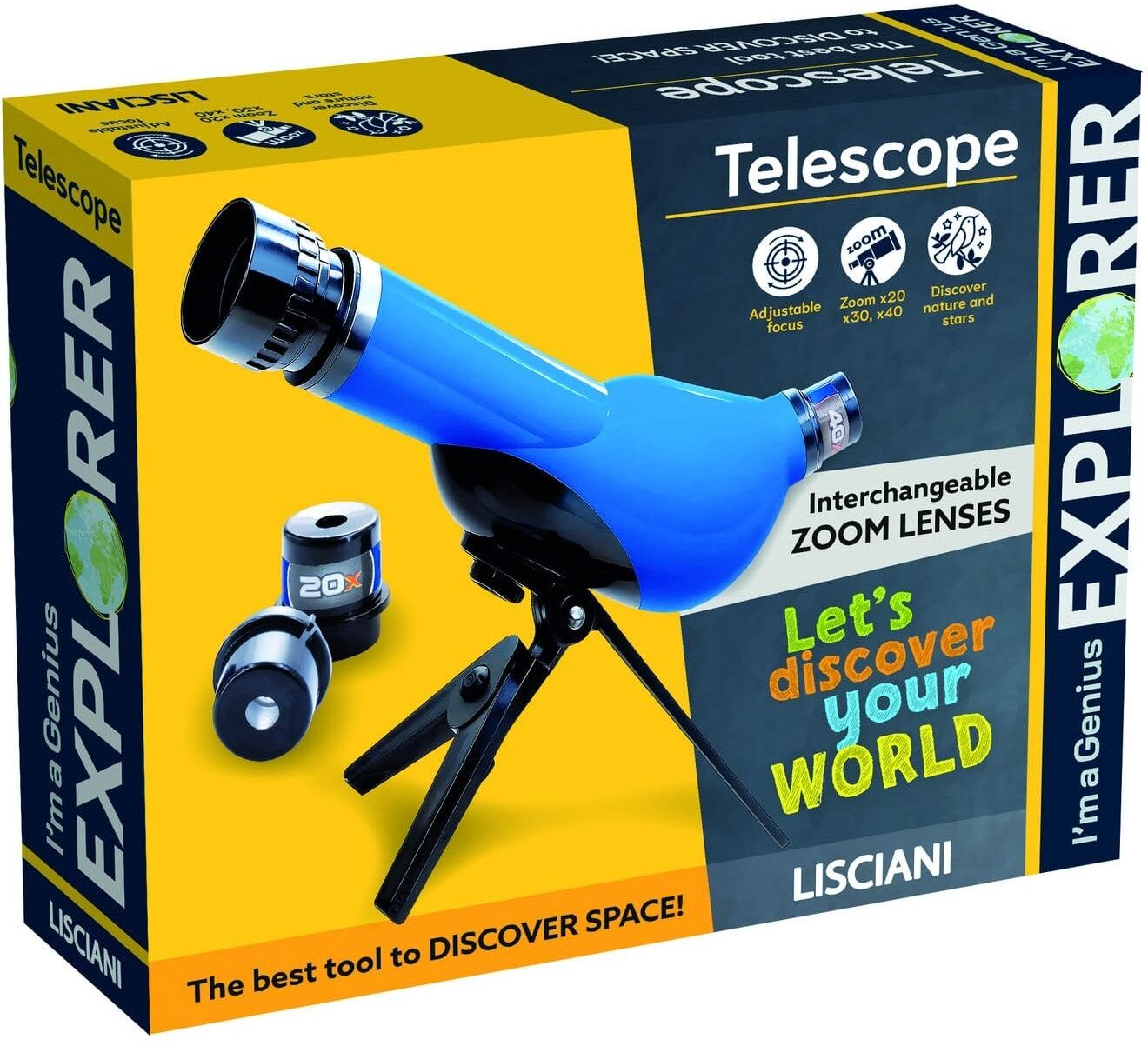
Lisciani I'm A Genius Telescope - Beginner Astronomy Tool for Sky ViewingA beginner-friendly telescope for first steps in astronomy and close-up sky viewing. Easy assembly and focusing for clearer views of stars and constellations. Ideal for family stargazing and early science projects.13,96 £*Shipping: 3,95 £Secure redirect to the provider



-
Can you help me with the astronomy task on azimuth and altitude?
Of course! I'd be happy to help you with the astronomy task on azimuth and altitude. Azimuth is the measurement of an object's position in the sky, measured in degrees clockwise from true north. Altitude is the angle between an object in the sky and the observer's horizon. Understanding these concepts is crucial for locating celestial objects in the night sky. Feel free to ask me any specific questions you have or for assistance with calculations or explanations related to azimuth and altitude. **
-
Why are my azimuth knobs not working?
There could be several reasons why your azimuth knobs are not working. It could be due to a mechanical issue such as the knobs being stuck or damaged. It is also possible that there is an electrical issue causing the knobs to malfunction, such as a loose connection or a faulty motor. Additionally, if the telescope's software or settings are not properly configured, it could prevent the azimuth knobs from functioning correctly. It is recommended to troubleshoot these potential issues or consult the telescope's manual for further assistance. **
-
What azimuth does the North Star have?
The North Star, also known as Polaris, has an azimuth of 0 degrees. This means that it is located due north, making it a useful navigational tool for determining direction. In the Northern Hemisphere, the North Star appears to remain stationary in the night sky, making it a reliable reference point for finding true north. **
-
How to observe the constellations in astronomy taking into account azimuth, altitude, apparent daily motion, and angular separation?
To observe constellations in astronomy, you can start by determining the azimuth and altitude of the constellation you want to observe. Azimuth is the direction of the constellation from true north, while altitude is the angle above the horizon. You can use a star chart or a planetarium app to find the azimuth and altitude of the constellation at a specific time and location. Additionally, you should consider the apparent daily motion of the stars, which is the eastward movement of the stars due to the Earth's rotation. Finally, you can also take into account the angular separation between constellations, which is the angle between two stars or celestial objects in the sky. By considering these factors, you can effectively observe and track the constellations in the night sky. **


How does SpaceX calculate the landing of their spacecraft in astronomy?
SpaceX calculates the landing of their spacecraft using a combination of advanced computer algorithms, sensor data, and real-time adjustments. They use a system of cameras, radar, and GPS to track the position and orientation of the spacecraft as it descends back to Earth. This data is then fed into the spacecraft's guidance system, which makes continuous adjustments to ensure a precise landing. Additionally, SpaceX's engineers constantly monitor the spacecraft's trajectory and make any necessary course corrections to ensure a safe and accurate landing. **
How does a satellite reach its intended orbit?
A satellite reaches its intended orbit by being launched into space on a rocket. The rocket carries the satellite to a specific altitude and velocity needed to achieve orbit. Once in space, the satellite's onboard propulsion system is used to fine-tune its trajectory and adjust its speed to reach the desired orbit. The satellite must follow a precise path to ensure it stays in orbit around the Earth. **
Top-Angebote
Products related to Azimuth:
-
Wilco Publishing Universal Knowledge Library 8 Books Collection Set 1 (Space Exploration, Great Scientists, Astronomy, Wonders of the World, Pyramids and More)Universal Knowledge Library 8 Books Collection Set 1 (Space Exploration, Great Scientists, Astronomy, Wonders of the World, Pyramids and More) Discover fascinating facts about science, history, space and the world around us with the Universal Knowledge Library 8 Books Collection Set 1. This educational 8-book collection introduces young readers to a wide range of engaging topics, including Space Exploration, Great Scientists, Astronomy, Wonders of the World, Pyramids and more. Designed to make learning interesting and accessible, the series is ideal for children who enjoy discovering new facts, exploring important scientific ideas and learning about remarkable people, places and achievements. A useful addition to any home learning collection, school library or classroom, this set also makes a great educational gift for curious young readers. Arctic & Antarctic Dive into the icy extremes of Earth and meet the unique animals that live at the poles. World War I An engaging introduction to World War I—its causes, events, and lasting impact on history.. World War II Explore the major battles, leaders, and turning points of WWII in a simplified and visual format. Pyramids Uncover the secrets of ancient pyramids—from Egypt to Mesoamerica—in this easy-to-read guide. Wonders of the World Travel through ancient and modern marvels that have amazed humans for centuries. Astronomy A brilliant beginner’s guide to the night sky, stars, constellations, and planets. Great Scientists Meet the pioneers who changed the world—from Newton to Curie—with their groundbreaking discoveries. Space Exploration Blast off with rockets, satellites, and astronauts in this beginner’s guide to space travel.14,99 £*Shipping: 2,99 £Secure redirect to the provider
-
Rocket League Steam CD KeySoccer meets racing once again in our long-awaited, MP-focused sequel to Supersonic Acrobatic Rocket-Powered Battle-Cars! A futuristic Sports-Action game, Rocket League, equips players with booster-rigged vehicles that can be crashed into balls for incredible goals or epic saves across multiple, highly-detailed arenas. Using an advanced physics system to simulate realistic interactions, Rocket League relies on mass and momentum to give players a complete sense of intuitive control in this unbelievable, high-octane re-imagining of association football.449,18 £*Shipping: 0,00 £Secure redirect to the provider
-
How can one determine altitude and azimuth in astronomy?
Altitude and azimuth can be determined in astronomy using a variety of tools and techniques. One common method is to use a tool called a theodolite, which measures the angle between the celestial object and the horizon to determine its altitude. Azimuth, on the other hand, can be determined using a compass to measure the angle between the celestial object and the north point on the horizon. Additionally, specialized software and apps can also be used to calculate altitude and azimuth based on the observer's location and the position of celestial objects in the sky. **
-
What is the difference between azimuth and hour angle in astronomy?
In astronomy, azimuth and hour angle are both used to describe the position of celestial objects in the sky. Azimuth measures the horizontal direction of an object from a specific point, usually measured in degrees from the north, through east, south, and west. Hour angle, on the other hand, measures the angular distance of an object from the observer's meridian, usually measured in hours, minutes, and seconds. While azimuth is a measure of direction, hour angle is a measure of the object's position relative to the observer's location on Earth. **
-
Can you help me with the astronomy task on azimuth and altitude?
Of course! I'd be happy to help you with the astronomy task on azimuth and altitude. Azimuth is the measurement of an object's position in the sky, measured in degrees clockwise from true north. Altitude is the angle between an object in the sky and the observer's horizon. Understanding these concepts is crucial for locating celestial objects in the night sky. Feel free to ask me any specific questions you have or for assistance with calculations or explanations related to azimuth and altitude. **
-
Why are my azimuth knobs not working?
There could be several reasons why your azimuth knobs are not working. It could be due to a mechanical issue such as the knobs being stuck or damaged. It is also possible that there is an electrical issue causing the knobs to malfunction, such as a loose connection or a faulty motor. Additionally, if the telescope's software or settings are not properly configured, it could prevent the azimuth knobs from functioning correctly. It is recommended to troubleshoot these potential issues or consult the telescope's manual for further assistance. **
Similar search terms for Azimuth
-
Inspire Curations Plush Rocket Astronaut Pillow 58cm Soft Space Toy & Kids Room Decor rocket 58cmBlast off into comfort and imagination with this adorable plush rocket astronaut pillow. Designed to be both a cuddly companion and a playful decor piece, this soft spaceship toy instantly brings a sense of adventure to any room. Its large 58cm size...120,50 $*Shipping: 0,00 $Secure redirect to the provider
-
Lisciani I'm A Genius Telescope - Beginner Astronomy Tool for Sky ViewingA beginner-friendly telescope for first steps in astronomy and close-up sky viewing. Easy assembly and focusing for clearer views of stars and constellations. Ideal for family stargazing and early science projects.13,96 £*Shipping: 3,95 £Secure redirect to the provider
-
What azimuth does the North Star have?
The North Star, also known as Polaris, has an azimuth of 0 degrees. This means that it is located due north, making it a useful navigational tool for determining direction. In the Northern Hemisphere, the North Star appears to remain stationary in the night sky, making it a reliable reference point for finding true north. **
-
How to observe the constellations in astronomy taking into account azimuth, altitude, apparent daily motion, and angular separation?
To observe constellations in astronomy, you can start by determining the azimuth and altitude of the constellation you want to observe. Azimuth is the direction of the constellation from true north, while altitude is the angle above the horizon. You can use a star chart or a planetarium app to find the azimuth and altitude of the constellation at a specific time and location. Additionally, you should consider the apparent daily motion of the stars, which is the eastward movement of the stars due to the Earth's rotation. Finally, you can also take into account the angular separation between constellations, which is the angle between two stars or celestial objects in the sky. By considering these factors, you can effectively observe and track the constellations in the night sky. **
-
How does SpaceX calculate the landing of their spacecraft in astronomy?
SpaceX calculates the landing of their spacecraft using a combination of advanced computer algorithms, sensor data, and real-time adjustments. They use a system of cameras, radar, and GPS to track the position and orientation of the spacecraft as it descends back to Earth. This data is then fed into the spacecraft's guidance system, which makes continuous adjustments to ensure a precise landing. Additionally, SpaceX's engineers constantly monitor the spacecraft's trajectory and make any necessary course corrections to ensure a safe and accurate landing. **
-
How does a satellite reach its intended orbit?
A satellite reaches its intended orbit by being launched into space on a rocket. The rocket carries the satellite to a specific altitude and velocity needed to achieve orbit. Once in space, the satellite's onboard propulsion system is used to fine-tune its trajectory and adjust its speed to reach the desired orbit. The satellite must follow a precise path to ensure it stays in orbit around the Earth. **
* All prices are inclusive of VAT and, if applicable, plus shipping costs. The offer information is based on the details provided by the respective shop and is updated through automated processes. Real-time updates do not occur, so deviations can occur in individual cases. ** Note: Parts of this content were created by AI.