Buy orbiter.eu ?
We are moving the project
orbiter.eu .
Are you interested in purchasing the domain
orbiter.eu ?
domain@kv-gmbh.de · 0541-91531010
Buy orbiter.eu ?
What is fusible interfacing?
Fusible interfacing is a type of material used in sewing to add structure and stability to fabrics. It is typically made of a woven or non-woven material that has a heat-activated adhesive on one side. When ironed onto the fabric, the adhesive melts and bonds the interfacing to the fabric, providing support for areas such as collars, cuffs, and waistbands. Fusible interfacing comes in different weights and can be used to achieve different levels of stiffness or drape in a garment. **
Where can one get fusible interfacing?
Fusible interfacing can be purchased at most fabric stores, both in-store and online. It is commonly found in the notions section alongside other sewing supplies. Additionally, fusible interfacing can also be found at craft stores and specialty sewing shops. It is available in various weights and types to suit different projects and fabrics. **


Similar search terms for Fusible
Top-Angebote
Products related to Fusible:
-
Inspire Curations Plush Rocket Astronaut Pillow 58cm Soft Space Toy & Kids Room Decor rocket 58cmBlast off into comfort and imagination with this adorable plush rocket astronaut pillow. Designed to be both a cuddly companion and a playful decor piece, this soft spaceship toy instantly brings a sense of adventure to any room. Its large 58cm size...120,50 $*Shipping: 0,00 $Secure redirect to the provider
-
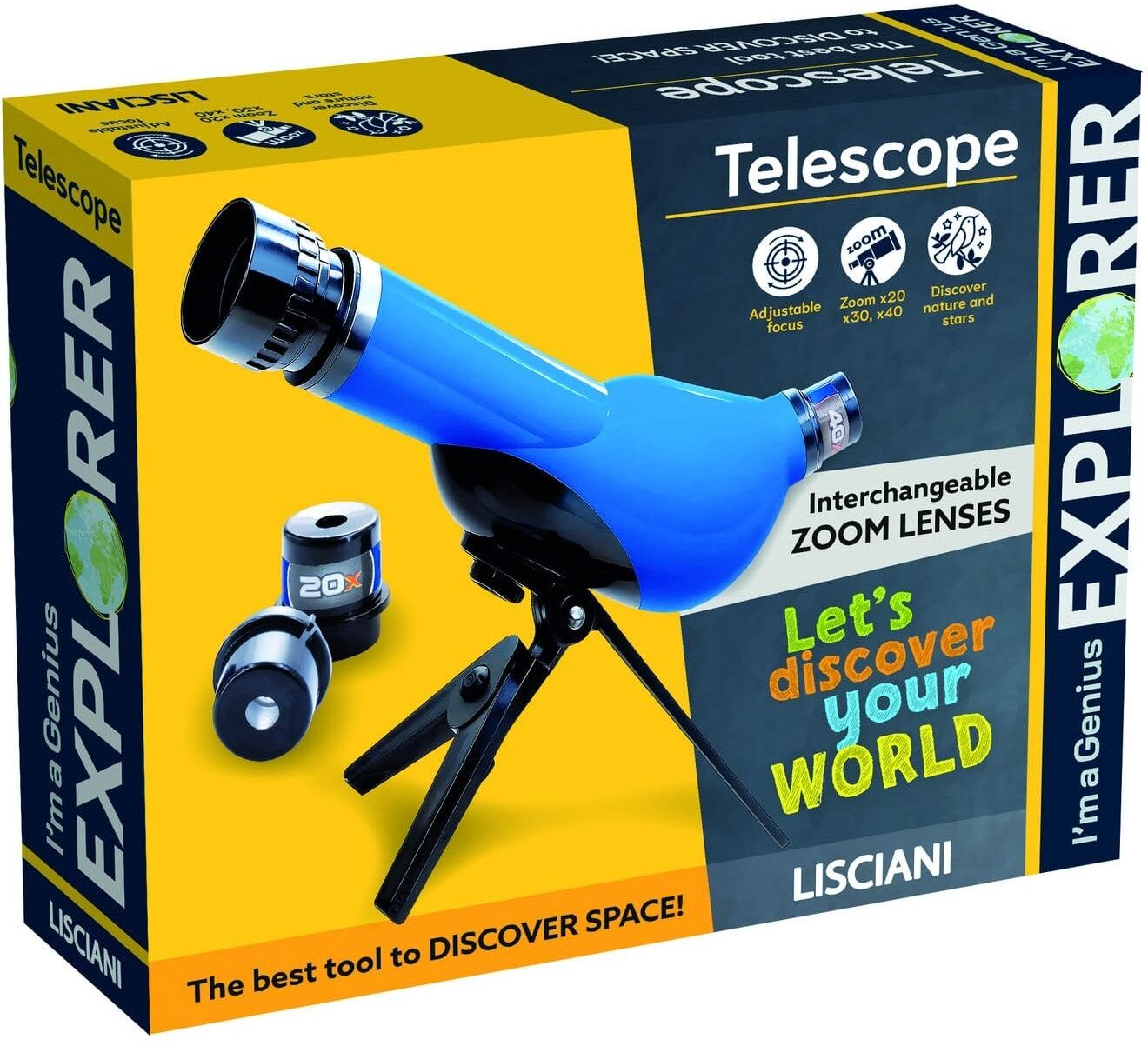
Lisciani I'm A Genius Telescope - Beginner Astronomy Tool for Sky ViewingA beginner-friendly telescope for first steps in astronomy and close-up sky viewing. Easy assembly and focusing for clearer views of stars and constellations. Ideal for family stargazing and early science projects.13,96 £*Shipping: 3,95 £Secure redirect to the provider
-
Collins 2024 Guide to the Night Sky Book – Astronomy & Stargazing CollectionFrom the UK’s Number One Astronomy publisher, this is the bestselling stargazing handbook to the planets, stars and constellations visible from the northern hemisphere. With 6 pages for each month covering January–December 2024. This practical guide is an easy introduction to astronomy and a useful reference for seasoned stargazers. Designed for Britain and Ireland but usable anywhere in the world between 40°N and 60°N, covering most of Europe, southern Canada and the northern United States. Advice on where to start looking and a map of dark sky sites to avoid light pollution. Charts for the circumpolar and seasonal constellations. Easy-to-use star charts for each month with descriptions of objects and events to look for in 2024. Positions of the moon, visible planets and eclipses. Includes a section on comets and a detailed map of the moon. Now in three editions: Britain and Ireland; North America; Southern Hemisphere. Written and illustrated by astronomical experts, Storm Dunlop and Wil Tirion, and approved by the astronomers of the Royal Observatory Greenwich.1,99 £*Shipping: 1,99 £Secure redirect to the provider
-
Garmin inReach Mini 3 Plus SOS Satellite Communicator.gadcet-pdp{--g-green:#00a651;color:#1f2430;line-height:1.55;font-size:inherit;max-width:760px}.gadcet-pdp>*:first-child{margin-top:0}.gadcet-pdp p{margin:0 0.9em}.gadcet-pdp h3{font-size:1.05em;font-weight:600;color:#11161f;margin:1.4em 0.5em;padding-left:.5em;border-left:3px solid var(--g-green);border-radius:0;line-height:1.3}.gadcet-pdp ul{list-style:none!important;margin:0 0.9em;padding:0!important}.gadcet-pdp ul li{position:relative;padding:.1em 0.1em 1.5em;margin:0}.gadcet-pdp ul li::before{content:"";position:absolute;left:.16em;top:.45em;width:.36em;height:.66em;border:solid var(--g-green);border-width:0.14em.14em 0;transform:rotate(45deg)}.gadcet-pdp table{width:100%;border-collapse:collapse;margin:.3em 0 1em;font-size:.95em;border:1px solid #e7e9ee!important;border-radius:8px;overflow:hidden}.gadcet-pdp table td{padding:.5em.8em;border-bottom:1px solid #eef0f4!important;vertical-align:top}.gadcet-pdp table tr:last-child td{border-bottom:0!important}.gadcet-pdp table tr:nth-child(even){background:#f7f9f8}.gadcet-pdp table td:first-child{font-weight:600;color:#454c59;width:40%}@media (max-width:600px){.gadcet-pdp table td:first-child{width:42%}} Stay reachable when your phone has no signal with the Garmin inReach Mini 3 Plus SOS Satellite Communicator — a compact, rugged device built for hiking, climbing, cycling, skiing, boating and remote travel beyond mobile coverage. Key Features Satellite communication for two-way text messaging where cellular networks can't reach Interactive SOS to the 24/7 Garmin Response emergency coordination centre Record and exchange voice messages up to 30 seconds long, with transcription for reading them as text Touchscreen texting up to 1,600 characters, with emojis, reactions and group chats Photo sharing over satellite via the Garmin Messenger app LiveTrack location sharing so family and friends can follow your progress, including distance, time and elevation TracBack routing to guide you back along your previous route Pair with the Garmin Explore app to plan trips, follow courses and view more detailed mapping Clear 1.9-inch colour touchscreen and voice-command control for quick check-ins and tracking Battery life of up to around 350 hours in 10-minute tracking mode Rugged IP67-rated housing — withstands incidental immersion in up to 1 metre of water for up to 30 minutes Lightweight at around 4.4oz / 125g, easy to clip to a pack or slip in a pocket Works with compatible Garmin watches and Edge cycling computers Benefits Keep in contact with family, friends or colleagues in remote areas with no mobile signal Get help fast with an interactive SOS and trained coordinators who can liaise with local emergency resources Explain conditions or plans quickly with voice messages instead of typing Let loved ones follow your adventure in real time for added peace of mind Navigate unfamiliar terrain confidently with TracBack and Garmin Explore Travel light without compromising on safety or battery life Specifications...438,98 £*Shipping: 0,00 £Secure redirect to the provider



-
Does anyone know how to sew curtains from two fabrics without using fusible interfacing?
Yes, it is possible to sew curtains from two fabrics without using fusible interfacing. One method is to sew the two fabrics together with a straight stitch or a decorative stitch to create a seamless look. Another method is to use a lining fabric to give the curtains structure and weight without the need for fusible interfacing. Additionally, you can also use a sewing machine to create a blind hem on the curtains to join the two fabrics together. **
-
How does SpaceX calculate the landing of their spacecraft in astronomy?
SpaceX calculates the landing of their spacecraft using a combination of advanced computer algorithms, sensor data, and real-time adjustments. They use a system of cameras, radar, and GPS to track the position and orientation of the spacecraft as it descends back to Earth. This data is then fed into the spacecraft's guidance system, which makes continuous adjustments to ensure a precise landing. Additionally, SpaceX's engineers constantly monitor the spacecraft's trajectory and make any necessary course corrections to ensure a safe and accurate landing. **
-
How does a satellite reach its intended orbit?
A satellite reaches its intended orbit by being launched into space on a rocket. The rocket carries the satellite to a specific altitude and velocity needed to achieve orbit. Once in space, the satellite's onboard propulsion system is used to fine-tune its trajectory and adjust its speed to reach the desired orbit. The satellite must follow a precise path to ensure it stays in orbit around the Earth. **
-
How often does a satellite orbit the Earth?
The frequency at which a satellite orbits the Earth depends on its altitude and purpose. Most satellites in low Earth orbit (LEO) complete an orbit roughly every 90 minutes, traveling at speeds of around 28,000 kilometers per hour. Satellites in higher orbits, such as geostationary orbit, take longer to complete an orbit, typically around 24 hours. Overall, satellites orbit the Earth continuously, providing various services such as communication, weather monitoring, and navigation. **

How long does a satellite take to orbit the Earth?
The time it takes for a satellite to orbit the Earth depends on its altitude and speed. Low Earth orbit satellites, which are typically used for communication and Earth observation, can complete an orbit in about 90 minutes. Geostationary satellites, which orbit at a much higher altitude and are used for weather forecasting and communication, take 24 hours to complete one orbit, matching the Earth's rotation. **
How long does it take for a satellite to orbit the Earth?
The time it takes for a satellite to orbit the Earth depends on its altitude and the speed at which it is traveling. For a satellite in low Earth orbit, it takes approximately 90 minutes to complete one orbit. Satellites in higher orbits, such as geostationary orbit, can take 24 hours to complete one orbit, which allows them to remain in a fixed position relative to the Earth's surface. The specific orbital period can be calculated using Kepler's laws of planetary motion. **
Top-Angebote
Products related to Fusible:
-
Hamilton Gas Products Ltd Electro Thermal Fusible LinkElectro thermal fusible link for use in boiler houses. The electro thermal fusible link is for installing in a position where a fire hazard may occur, e.g. Above a burner, an air heater or boiler. The fire will melt the fusible metal link and interrupt the electrical supply to either a gas valve or an alarm etc. The link consists of a purpose built cast aluminium box with a perforated cover having a temperature sensitive fuse. The unit should be mounted so that the perforated cover faces downwards and the ventilation holes in the back of the box must not be obstructed. The link is electrically rated at 5 amps maximum on 200/250volts, single phase, 50 hertz and melts at 155 deg f (68 deg c). Metal box version approx. 3” x 2” x 1”.11,34 £*Shipping: 5,00 £Secure redirect to the provider
-
Wilco Publishing Universal Knowledge Library 8 Books Collection Set 1 (Space Exploration, Great Scientists, Astronomy, Wonders of the World, Pyramids and More)Universal Knowledge Library 8 Books Collection Set 1 (Space Exploration, Great Scientists, Astronomy, Wonders of the World, Pyramids and More) Discover fascinating facts about science, history, space and the world around us with the Universal Knowledge Library 8 Books Collection Set 1. This educational 8-book collection introduces young readers to a wide range of engaging topics, including Space Exploration, Great Scientists, Astronomy, Wonders of the World, Pyramids and more. Designed to make learning interesting and accessible, the series is ideal for children who enjoy discovering new facts, exploring important scientific ideas and learning about remarkable people, places and achievements. A useful addition to any home learning collection, school library or classroom, this set also makes a great educational gift for curious young readers. Arctic & Antarctic Dive into the icy extremes of Earth and meet the unique animals that live at the poles. World War I An engaging introduction to World War I—its causes, events, and lasting impact on history.. World War II Explore the major battles, leaders, and turning points of WWII in a simplified and visual format. Pyramids Uncover the secrets of ancient pyramids—from Egypt to Mesoamerica—in this easy-to-read guide. Wonders of the World Travel through ancient and modern marvels that have amazed humans for centuries. Astronomy A brilliant beginner’s guide to the night sky, stars, constellations, and planets. Great Scientists Meet the pioneers who changed the world—from Newton to Curie—with their groundbreaking discoveries. Space Exploration Blast off with rockets, satellites, and astronauts in this beginner’s guide to space travel.14,99 £*Shipping: 2,99 £Secure redirect to the provider
-
Inspire Curations Plush Rocket Astronaut Pillow 58cm Soft Space Toy & Kids Room Decor rocket 58cmBlast off into comfort and imagination with this adorable plush rocket astronaut pillow. Designed to be both a cuddly companion and a playful decor piece, this soft spaceship toy instantly brings a sense of adventure to any room. Its large 58cm size...120,50 $*Shipping: 0,00 $Secure redirect to the provider
-
Lisciani I'm A Genius Telescope - Beginner Astronomy Tool for Sky ViewingA beginner-friendly telescope for first steps in astronomy and close-up sky viewing. Easy assembly and focusing for clearer views of stars and constellations. Ideal for family stargazing and early science projects.13,96 £*Shipping: 3,95 £Secure redirect to the provider
-
What is fusible interfacing?
Fusible interfacing is a type of material used in sewing to add structure and stability to fabrics. It is typically made of a woven or non-woven material that has a heat-activated adhesive on one side. When ironed onto the fabric, the adhesive melts and bonds the interfacing to the fabric, providing support for areas such as collars, cuffs, and waistbands. Fusible interfacing comes in different weights and can be used to achieve different levels of stiffness or drape in a garment. **
-
Where can one get fusible interfacing?
Fusible interfacing can be purchased at most fabric stores, both in-store and online. It is commonly found in the notions section alongside other sewing supplies. Additionally, fusible interfacing can also be found at craft stores and specialty sewing shops. It is available in various weights and types to suit different projects and fabrics. **
-
Does anyone know how to sew curtains from two fabrics without using fusible interfacing?
Yes, it is possible to sew curtains from two fabrics without using fusible interfacing. One method is to sew the two fabrics together with a straight stitch or a decorative stitch to create a seamless look. Another method is to use a lining fabric to give the curtains structure and weight without the need for fusible interfacing. Additionally, you can also use a sewing machine to create a blind hem on the curtains to join the two fabrics together. **
-
How does SpaceX calculate the landing of their spacecraft in astronomy?
SpaceX calculates the landing of their spacecraft using a combination of advanced computer algorithms, sensor data, and real-time adjustments. They use a system of cameras, radar, and GPS to track the position and orientation of the spacecraft as it descends back to Earth. This data is then fed into the spacecraft's guidance system, which makes continuous adjustments to ensure a precise landing. Additionally, SpaceX's engineers constantly monitor the spacecraft's trajectory and make any necessary course corrections to ensure a safe and accurate landing. **
Similar search terms for Fusible
-
Collins 2024 Guide to the Night Sky Book – Astronomy & Stargazing CollectionFrom the UK’s Number One Astronomy publisher, this is the bestselling stargazing handbook to the planets, stars and constellations visible from the northern hemisphere. With 6 pages for each month covering January–December 2024. This practical guide is an easy introduction to astronomy and a useful reference for seasoned stargazers. Designed for Britain and Ireland but usable anywhere in the world between 40°N and 60°N, covering most of Europe, southern Canada and the northern United States. Advice on where to start looking and a map of dark sky sites to avoid light pollution. Charts for the circumpolar and seasonal constellations. Easy-to-use star charts for each month with descriptions of objects and events to look for in 2024. Positions of the moon, visible planets and eclipses. Includes a section on comets and a detailed map of the moon. Now in three editions: Britain and Ireland; North America; Southern Hemisphere. Written and illustrated by astronomical experts, Storm Dunlop and Wil Tirion, and approved by the astronomers of the Royal Observatory Greenwich.1,99 £*Shipping: 1,99 £Secure redirect to the provider
-
Garmin inReach Mini 3 Plus SOS Satellite Communicator.gadcet-pdp{--g-green:#00a651;color:#1f2430;line-height:1.55;font-size:inherit;max-width:760px}.gadcet-pdp>*:first-child{margin-top:0}.gadcet-pdp p{margin:0 0.9em}.gadcet-pdp h3{font-size:1.05em;font-weight:600;color:#11161f;margin:1.4em 0.5em;padding-left:.5em;border-left:3px solid var(--g-green);border-radius:0;line-height:1.3}.gadcet-pdp ul{list-style:none!important;margin:0 0.9em;padding:0!important}.gadcet-pdp ul li{position:relative;padding:.1em 0.1em 1.5em;margin:0}.gadcet-pdp ul li::before{content:"";position:absolute;left:.16em;top:.45em;width:.36em;height:.66em;border:solid var(--g-green);border-width:0.14em.14em 0;transform:rotate(45deg)}.gadcet-pdp table{width:100%;border-collapse:collapse;margin:.3em 0 1em;font-size:.95em;border:1px solid #e7e9ee!important;border-radius:8px;overflow:hidden}.gadcet-pdp table td{padding:.5em.8em;border-bottom:1px solid #eef0f4!important;vertical-align:top}.gadcet-pdp table tr:last-child td{border-bottom:0!important}.gadcet-pdp table tr:nth-child(even){background:#f7f9f8}.gadcet-pdp table td:first-child{font-weight:600;color:#454c59;width:40%}@media (max-width:600px){.gadcet-pdp table td:first-child{width:42%}} Stay reachable when your phone has no signal with the Garmin inReach Mini 3 Plus SOS Satellite Communicator — a compact, rugged device built for hiking, climbing, cycling, skiing, boating and remote travel beyond mobile coverage. Key Features Satellite communication for two-way text messaging where cellular networks can't reach Interactive SOS to the 24/7 Garmin Response emergency coordination centre Record and exchange voice messages up to 30 seconds long, with transcription for reading them as text Touchscreen texting up to 1,600 characters, with emojis, reactions and group chats Photo sharing over satellite via the Garmin Messenger app LiveTrack location sharing so family and friends can follow your progress, including distance, time and elevation TracBack routing to guide you back along your previous route Pair with the Garmin Explore app to plan trips, follow courses and view more detailed mapping Clear 1.9-inch colour touchscreen and voice-command control for quick check-ins and tracking Battery life of up to around 350 hours in 10-minute tracking mode Rugged IP67-rated housing — withstands incidental immersion in up to 1 metre of water for up to 30 minutes Lightweight at around 4.4oz / 125g, easy to clip to a pack or slip in a pocket Works with compatible Garmin watches and Edge cycling computers Benefits Keep in contact with family, friends or colleagues in remote areas with no mobile signal Get help fast with an interactive SOS and trained coordinators who can liaise with local emergency resources Explain conditions or plans quickly with voice messages instead of typing Let loved ones follow your adventure in real time for added peace of mind Navigate unfamiliar terrain confidently with TracBack and Garmin Explore Travel light without compromising on safety or battery life Specifications...438,98 £*Shipping: 0,00 £Secure redirect to the provider
-
RLF Home Orbit Regal Valance"RLF Home Orbit Geometric Regal Valance. Fits window up to 48""W. Add multiples for wider windows. Use a 2-1/2"" Continental rod, a regular 3/4"" rod, tension rod or decorative pole no more than 1-3/8"" diameter (NOT INCLUDED)."62,99 $*Shipping: 0,00 $Secure redirect to the provider
-
How does a satellite reach its intended orbit?
A satellite reaches its intended orbit by being launched into space on a rocket. The rocket carries the satellite to a specific altitude and velocity needed to achieve orbit. Once in space, the satellite's onboard propulsion system is used to fine-tune its trajectory and adjust its speed to reach the desired orbit. The satellite must follow a precise path to ensure it stays in orbit around the Earth. **
-
How often does a satellite orbit the Earth?
The frequency at which a satellite orbits the Earth depends on its altitude and purpose. Most satellites in low Earth orbit (LEO) complete an orbit roughly every 90 minutes, traveling at speeds of around 28,000 kilometers per hour. Satellites in higher orbits, such as geostationary orbit, take longer to complete an orbit, typically around 24 hours. Overall, satellites orbit the Earth continuously, providing various services such as communication, weather monitoring, and navigation. **
-
How long does a satellite take to orbit the Earth?
The time it takes for a satellite to orbit the Earth depends on its altitude and speed. Low Earth orbit satellites, which are typically used for communication and Earth observation, can complete an orbit in about 90 minutes. Geostationary satellites, which orbit at a much higher altitude and are used for weather forecasting and communication, take 24 hours to complete one orbit, matching the Earth's rotation. **
-
How long does it take for a satellite to orbit the Earth?
The time it takes for a satellite to orbit the Earth depends on its altitude and the speed at which it is traveling. For a satellite in low Earth orbit, it takes approximately 90 minutes to complete one orbit. Satellites in higher orbits, such as geostationary orbit, can take 24 hours to complete one orbit, which allows them to remain in a fixed position relative to the Earth's surface. The specific orbital period can be calculated using Kepler's laws of planetary motion. **
* All prices are inclusive of VAT and, if applicable, plus shipping costs. The offer information is based on the details provided by the respective shop and is updated through automated processes. Real-time updates do not occur, so deviations can occur in individual cases. ** Note: Parts of this content were created by AI.